
Best Country for European Fulfillment: Netherlands, Germany, Poland
Netherlands, Germany or Poland for your EU stock? Compare ports, import VAT rules and listed 3PLs, with clear guidance for US, UK and Australian brands.
 By Andrew Calloway, editor
Published October 5, 2026 · Updated October 9, 2026
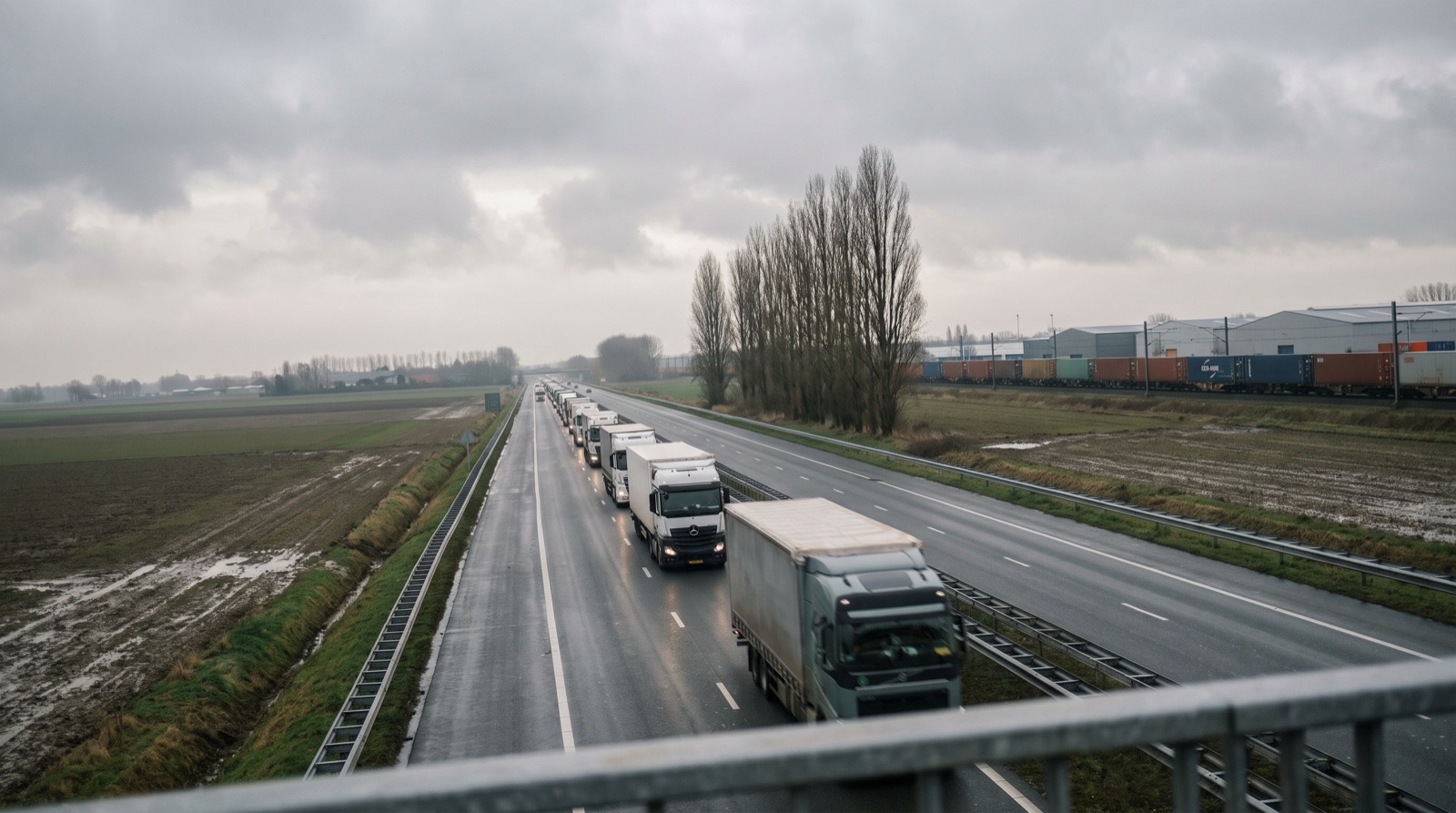
The best country for European fulfillment is the one closest to your buyers and your inbound freight. If you sell from the United States, the United Kingdom or Australia and want a 3PL in Europe, the shortlist usually comes down to the Netherlands, Germany and Poland, and each one suits a different kind of seller.
Below, the three sit side by side on freight, import VAT and provider counts, with shorter notes on Belgium, France, Czechia and the UK.
There is no single best country for a 3PL in Europe. Choose the Netherlands if your goods arrive by sea and your buyers are spread across the EU. Choose Germany if most orders go to German addresses or you sell heavily on marketplaces. Choose Poland if your market runs east and a non-euro base suits you. If British buyers matter, hold a separate stock pool in the UK.
What changed in 2026 for brands shipping into Europe
The case for holding stock inside the EU got stronger this year. Since 1 July 2026 the EU has applied a temporary customs duty of EUR 3 per item to goods in distance-sale consignments worth up to EUR 150. It runs until 1 July 2028. “Per item” follows the type of goods, not the quantity: in the Commission’s example, five T-shirts count as one item and a T-shirt plus a watch count as two.
A brand that imports stock in bulk clears customs once instead of parcel by parcel. After that, goods circulate freely within the EU, with no customs duties at the borders between member states. The open question is which country should hold it.
How we compared the three countries
Port and airport volumes are Eurostat’s 2024 figures. VAT rates come from the EU’s Your Europe VAT table, last checked on 13 July 2026, and import VAT rules from each country’s tax authority. Provider counts cover the companies listed in this directory as of October 2026 and what each states on its own website; a company that says nothing about a service may still offer it.
Prices, wages, rents and delivery times are left out because no official source used here compares them fairly. Ask providers for quotes and transit times directly.
Netherlands vs Germany vs Poland at a glance
| Netherlands | Germany | Poland | |
|---|---|---|---|
| EU member and currency | Yes, euro | Yes, euro | Yes, zloty |
| Standard VAT rate | 21% | 19% | 23% |
| Main seaport, 2024 | Rotterdam, 397 million tonnes | Hamburg, 97 million tonnes | Gdańsk, in the EU top 10 |
| Air freight, 2024 | Schiphol above 1 million tonnes | Frankfurt 2.0 million tonnes; Leipzig Halle above 1 million | No airport among the EU’s five above 1 million tonnes |
| Import VAT in the VAT return | Article 23 permit, through a tax representative for foreign firms | Not covered here; ask a tax adviser | Article 33a, for registered active VAT payers |
| Companies listed in this directory | 134 | 171 | 151 |
| State ecommerce fulfillment | 126 | 160 | 120 |
| State a Shopify connection | 72 | 74 | 13 |
| State marketplace fulfillment | 86 | 100 | 39 |
| State customs and import services | 38 | 73 | 27 |
| State bonded warehousing | 17 | 17 | 7 |
| State they work with non-EU brands | 9 | 3 | 2 |
Port and airport figures are Eurostat’s for 2024. The bottom seven rows count companies listed in this directory.
The Netherlands: for sea freight and buyers across the EU
The Dutch case starts at the port. Eurostat reports that Rotterdam handled 397 million tonnes of freight in 2024, the most of any EU port. Dutch ports together handled 538 million tonnes, 16.0% of the EU total, and Rotterdam was the EU’s largest container port with 13.4 million TEU. Amsterdam Schiphol was one of five EU airports above 1 million tonnes of freight and mail that year.
The Netherlands also has a defined route for import VAT. With an Article 23 permit, VAT on import isn’t paid at the border but on the VAT return. The Dutch Tax Administration says a foreign entrepreneur can’t apply for the permit itself, but a tax representative can apply on its behalf. Ask a tax adviser whether it fits you; VAT in the Netherlands for foreign sellers covers the detail.
Of the 134 Dutch companies listed here, 9 state that they work with brands from outside the EU, the most of the three countries. 3PL Service Netherlands is one: it runs ecommerce fulfillment from a single warehouse in Assen for US, UK and Australian brands shipping into the EU, connects to Shopify, WooCommerce, Magento, BigCommerce and Lightspeed, and handles non-hazardous goods that need no refrigeration.
Choose the Netherlands if your containers land at Rotterdam, your buyers are spread across several EU countries, and you want a provider that already serves overseas brands. See the Dutch fulfillment companies or the full 3PL Netherlands guide.
Germany: for German buyers and marketplace sellers
Germany has the most listed providers of the three: 171 companies, 160 of them stating ecommerce fulfillment. It also leads on stated marketplace fulfillment (100) and customs and import services (73).
Its freight strength is in the air. German airports handled 4.7 million tonnes of freight and mail in 2024, the highest volume in the EU. Frankfurt Main was the EU’s largest freight airport at 2.0 million tonnes, and Leipzig Halle also passed 1 million. By sea, Hamburg ranked third among EU ports with 97 million tonnes. The standard VAT rate is 19%.
Two rules from the Federal Central Tax Office (BZSt) matter here. Foreign businesses must be registered with a German tax office before they can get a German VAT number. A non-EU trader using the import scheme (IOSS) through Germany needs a representative established in Germany, reported to the BZSt. Confirm with a tax adviser which of these applies to you.
Only 3 German listings state that they work with brands from outside the EU, so ask that question early. Two that do:
- Symbiolog GmbH (symbiolog.de) in Burgbernheim, Bavaria, lets companies based outside the EU ship a full truckload to its warehouse so the goods are cleared through customs, using an EORI number, before orders arrive. It also handles dangerous goods. Rated 4.4 from 31 Google reviews.
- Grexon GmbH (grexon.com) in Neu-Ulm runs a 24,000 m2 logistics center with 39 loading docks, connects to more than 15 marketplaces, and prepares products for Amazon, eBay and Kaufland. For manufacturers entering the European market it handles customs clearance, transport and warehousing. Rated 5.0 from 13 Google reviews.
Choose Germany if most of your European orders go to German addresses, your freight arrives by air, or marketplaces drive your sales. Browse the fulfillment companies in Germany.
Poland: for central and eastern markets
Poland has been an EU member since 1 May 2004 and uses the zloty, not the euro. Its standard VAT rate is 23%, the highest of the three.
Gdańsk was among the EU’s top 10 ports in 2024 but fell 11.0% on 2023. Over the longer run, Poland registered the largest relative increase in port freight of any EU country between 2014 and 2024, at 80.7%, per Eurostat. Air freight fell 3.6% in Poland between 2023 and 2024, one of only two EU countries where it dropped.
On import VAT, Poland’s business portal states that a taxpayer registered as an active VAT payer may settle VAT on imported goods in the tax return for the period when the obligation arose, under Article 33a of the VAT Act. Ask a tax adviser whether you’d qualify.
Of 151 Polish listings, 120 state ecommerce fulfillment, but only 13 state a Shopify connection and 2 state work with non-EU brands. That means fewer say so, not that none can. Two examples:
- FLEX. e-commerce logistics company (flexlogistics.eu) in Kaszewy Kościelne preps stock for Amazon FBA and forwards it to fulfillment centers in Poland, Germany, Czechia, France, Spain, Italy and the UK. It lists six sites, three of them in Germany. Its customs work covers importer and EORI setup, and it names non-EU sellers making a first import into the EU among its clients. Rated 4.8 from 51 Google reviews.
- Logmaster (logmaster.pl) near Warsaw runs a customs agency next to its ecommerce fulfillment service, and its listing states it has held authorized economic operator (AEO) status since 2012. Rated 4.8 from 94 Google reviews at its Pruszków branch.
Choose Poland if your buyers are mainly in Poland or nearby markets, you sell through Amazon and want FBA prep, and you’re comfortable with a non-euro base. See the providers in Poland.
Other EU countries worth a look
Belgium
Antwerp-Bruges was the EU’s second-largest port in 2024, with 244 million tonnes and 12.4 million TEU, and Liège airport passed 1 million tonnes of freight and mail. Belgium uses the euro and its standard VAT rate is 21%. Of 41 Belgian listings, 27 state ecommerce fulfillment, and none yet state work with non-EU brands. See the Belgian listings.
France
Paris Charles de Gaulle was the EU’s second freight airport in 2024 with 1.9 million tonnes. French Customs states that since 1 January 2022, import VAT is reverse-charged automatically for every business identified for VAT in France, and that a company without a French VAT number must request one from its business tax office before importing. France has 193 listings, 160 of them stating ecommerce fulfillment. See the French listings.
Czechia
Czechia is in the EU but does not use the euro, and its standard VAT rate is 21%. Of its 64 listings, 26 state customs and import services, 11 state bonded warehousing and 18 state temperature-controlled storage, more than the Netherlands’ 10. See the Czech listings.
The UK: a separate stock pool, not an alternative
GOV.UK states that the UK has left the EU Single Market and Customs Union, and that exporting to the EU now involves UK export declarations and import requirements in the EU country. Stock in Britain serves British buyers; stock in the EU serves EU buyers.
An overseas seller who owns goods located in the UK at the point of sale must register and account for VAT on sales made directly to UK customers. The directory lists 242 UK companies, and 20 state that they work with brands from outside the EU, more than any other country in this comparison. If both markets matter, plan two stock pools and see the UK listings.
How to choose the best country for European fulfillment
Start from your order data, not a map. Group your last six months of European orders by country.
- If no single country holds most of your orders, look first at a single-site provider in the Netherlands or Germany that states it serves non-EU brands. The EU fulfillment for US and UK brands page lists them across all countries.
- If one country holds most of your orders, start with providers in that country.
- If you sell mainly on Amazon, compare FBA prep providers in Germany and Poland as well as fulfillment from your own stock.
- If UK buyers are a large share, add a UK provider and treat it as a second stock pool.
Then shortlist two or three providers and ask each the same questions. The steps are in how to choose a 3PL in Europe, and the best 3PL companies in Europe list names providers chosen on stated criteria.
FAQ
Is Germany or Poland better for fulfillment?
It depends on your buyers and channels. Germany has more listed providers here (171 against 151), and more state Shopify, marketplace and customs services. Poland suits brands whose buyers sit in Poland or nearby, and several Polish providers state Amazon FBA prep.
Should a UK brand use a 3PL in the UK or the EU?
Use both if you have real volume in both markets. The UK is outside the EU customs union, so goods sent from Great Britain to the EU need UK export declarations and must meet EU import requirements. A UK warehouse covers British orders, and an EU warehouse covers EU orders without a border on every parcel.
Do I need a warehouse in more than one EU country?
Usually not at the start. Once goods clear customs in one EU country, they move to other member states without customs duties at internal borders. VAT rules on where stock is held vary by country, so confirm your setup with a tax adviser.
Verdict: the best country for European fulfillment is where your buyers are
Pick a country because your freight lands there or your customers live there, not because a provider calls it central. For a brand with buyers across the EU and goods arriving by sea, the Netherlands is a strong starting point. For a German-heavy or marketplace-heavy brand, Germany is. For a brand selling into Poland and its neighbors, Poland is.
Whichever you choose, the best country for European fulfillment still needs the right provider. Open the Europe directory, filter to your country, and send three providers the same questions this week.