
Bonded Warehouse: What It Is and When to Use One (2026)
A bonded warehouse holds non-EU goods with import duty and VAT suspended. How EU customs warehousing works, who needs one, and when free circulation is simpler.
 By Andrew Calloway, editor
Published October 5, 2026 · Updated October 9, 2026
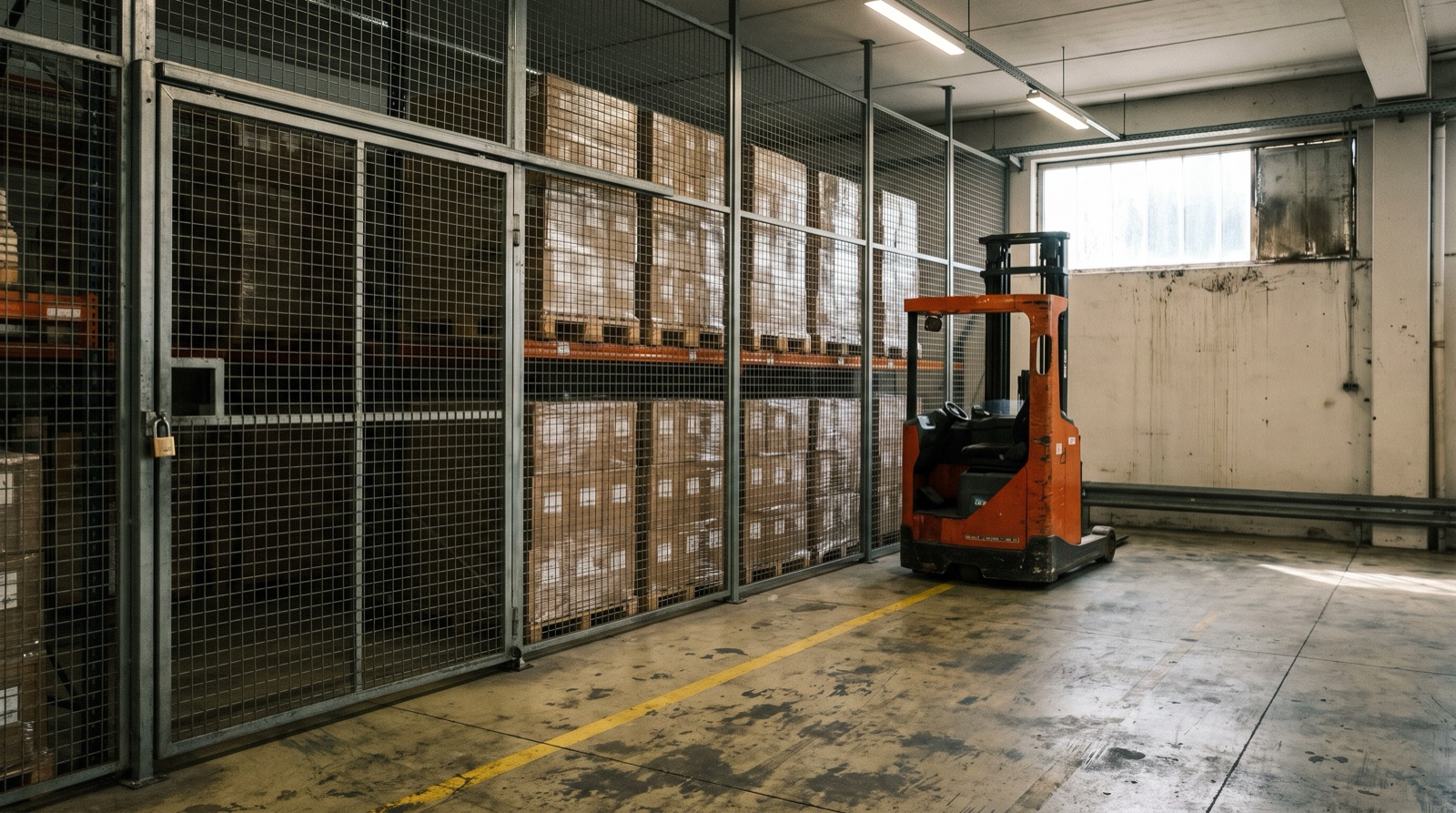
A bonded warehouse is a place where imported goods sit under customs control before the import duty or import VAT is paid. In the EU the legal name is a customs warehouse, and the rules come from the Union Customs Code. The charges fall due when goods leave storage for the EU market. If they leave the EU instead, they never do.
That makes bonded storage a tool for specific cases, not a default. Below: how customs warehousing works under EU law, what you can do to goods in storage, and when it earns its place.
A bonded warehouse (in EU law, a customs warehouse) stores non-EU goods under customs supervision with import duty and other charges suspended. Duty and import VAT become due when the goods are released for free circulation in the EU. It suits stock that may leave the EU again, stock whose destination country is still open, and high-duty goods. For stock that will all sell inside the EU, cleared stock is simpler.
What a bonded warehouse is under EU customs law
Customs warehousing is one of two storage procedures in EU law, alongside free zones. The Union Customs Code (Regulation (EU) No 952/2013) lists storage among its “special procedures” in Article 210, with transit, specific use and processing.
Article 240 defines the place. Non-EU goods may be stored “in premises or any other location authorised for that procedure by the customs authorities and under customs supervision”, and those places are customs warehouses. So the bonded warehouse meaning in Europe is simple: an approved site, watched by customs, holding goods that have not yet entered the EU market.
There is no fixed limit on how long goods can stay. Article 238 says there “shall be no limit to the length of time goods may remain under a storage procedure”. Customs can set a deadline in exceptional cases, mainly where long storage could threaten health or the environment.
How duty and import VAT are suspended in a bonded warehouse
Article 237 of the Code says non-EU goods under a storage procedure are not subject to import duty, other charges, or commercial policy measures that don’t prohibit entry. The European Commission’s customs storage page puts it plainly: while the goods remain in storage, they “will not be subject to import duties or other charges”.
The bill arrives on the way out. Before goods can be consumed in the EU, they must be removed from the warehouse and released for free circulation. At that stage, the Commission says, “import duty and any other related taxes (e.g. VAT or excise) will become due immediately”. Under Article 77 of the Code, the customs debt arises when the release declaration is accepted, and the declarant is the debtor.
Import VAT follows the same timing. Article 71 of the EU VAT Directive says that for goods placed under these arrangements on entry, VAT becomes chargeable only when the goods cease to be covered by them. Article 61 adds that the place of importation is the member state where that happens.
Storage ends in one of four ways under Article 215 of the Code: the goods are placed under another customs procedure (release for free circulation is one), taken out of the EU, destroyed with no waste remaining, or abandoned to the state. Who files the release declaration, and in whose name, is covered in the importer of record guide.
Public and private customs warehouses
Article 240(2) of the Code recognizes two kinds:
- Public customs warehouse: available for use by any person for the customs warehousing of goods.
- Private customs warehouse: for the storage of goods by the holder of an authorization for customs warehousing.
The difference matters for responsibility. Under Article 242, the holder of the authorization and the holder of the procedure are both responsible for keeping goods under customs supervision and meeting the storage obligations. For a public warehouse, the authorization may shift those duties entirely onto the holder of the procedure, the person who placed the goods under customs warehousing.
Who needs an authorization for a customs warehouse
The warehouse operator does. Article 211(1)(b) of the Union Customs Code requires a customs authorization for “the operation of storage facilities for the customs warehousing of goods”, unless customs runs the facility itself. Under Article 211(3), the applicant must:
- be established in the customs territory of the EU;
- give the necessary assurance that operations will be properly run (an Authorised Economic Operator for customs simplifications is treated as meeting this, where the activity is covered);
- provide a guarantee where a customs debt or other charges may be incurred.
The establishment condition is why a brand based in the US, UK or Australia does not run its own EU customs warehouse. It stores goods with a company that holds the authorization. In the Netherlands, Dutch Customs says anyone who wishes to manage a storage facility needs an authorization, applied for through the EU Trader Portal.
Whether your business also needs registrations of its own, such as an EORI or VAT number, depends on how the goods are declared and sold. Ask a tax adviser or your provider’s customs partner to confirm what applies to you.
What you can do to goods in bonded storage
More than many sellers expect, but less than in an ordinary warehouse. Article 220 of the Code allows “usual forms of handling intended to preserve them, improve their appearance or marketable quality or prepare them for distribution or resale.”
The permitted list is Annex 71-03 of Delegated Regulation (EU) 2015/2446. For an online brand, the useful items are:
- Counting and checking: stocktaking, sampling, sorting and weighing.
- Packaging and labels: packing, unpacking, change of packing, and affixing, removing or altering marks, seals, labels and price tags.
- Small fixes: repair of packing and simple repairs of damage from transport or storage.
- Preparing for sale: other handling that improves appearance or prepares goods for resale, provided it does not change the nature or improve the performance of the goods.
Unless the annex says otherwise, none of these may change the goods’ eight-digit Combined Nomenclature code. Real processing is a separate procedure: under Article 241, inward processing can be authorized inside a customs warehouse, but those goods are no longer under customs warehousing. Goods may also be temporarily removed from the warehouse, with customs approval in advance (Article 240(3)).
Dutch Customs adds a practical note: you can also use the customs warehouse as a distribution center.
When a bonded warehouse makes sense for an online brand
Stock that may leave the EU again. If part of a shipment will go to Switzerland, Norway, the UK or further afield, goods that exit from customs warehousing are never charged EU duty or import VAT, because Article 215 discharges the procedure when goods leave the EU. HMRC states the UK equivalent directly: if goods are re-exported, the suspended duty and import VAT do not become due.
Stock whose EU destination is still open. Under Article 61 of the VAT Directive, the import for VAT purposes takes place in the member state where goods leave the arrangement. A brand landing a container before it knows which market will absorb it keeps that choice open. How that affects your VAT registrations is a question for a tax adviser.
High-duty goods. The higher the duty rate, the more cash sits in duty paid on unsold stock. Customs warehousing defers payment until each batch is released. HMRC notes that this suspension “can help you with cashflow”.
The timing shows up when you work out your landed cost per unit. Duty paid at the border and duty paid at release are the same amount. What changes is when you pay, and whether you pay on goods that never sell in the EU.
When ordinary free-circulation stock is simpler
For a brand whose European stock will all go to EU customers, cleared stock is usually easier. Once duty is paid on entry, the Commission explains, “no more customs duties are due, and no more customs checks are conducted”. The goods circulate freely within the EU.
Bonded stock doesn’t reach that state until it is released, and every release needs a customs declaration. If you want single consumer orders fulfilled from bonded stock, ask the provider how it handles releases, how often it declares, and whose name is on the declaration. Ask too whether it releases stock in batches into a free-circulation area, or fulfills from bonded stock at all.
Customs supervision, records and authorization conditions are overhead. When goods won’t leave the EU, the destination is settled and duty is low, that overhead buys nothing.
Bonded warehouses in the UK and US
The term is shared, but each country runs its own rules. The UK is outside the EU customs union, so UK and EU customs warehouses are separate regimes.
- United Kingdom: GOV.UK describes customs warehousing as a special procedure that allows importers to store goods while suspending duties and import VAT, with public warehouses for businesses storing other people’s goods and private ones where the warehousekeeper and depositor are the same person.
- United States: U.S. Customs and Border Protection defines a customs bonded warehouse as a building or secured area where imported dutiable goods may be stored, manipulated or processed without payment of duty for up to 5 years from the date of importation.
Finding a bonded warehouse provider in Europe
Of the 1,665 companies in this directory, 195 state that they operate a bonded or customs warehouse or hold AEO status, across 24 countries. They are grouped on the bonded warehouses page. The directory reports what each company says and does not check its authorization, so ask to see it.
Three examples show the range:
- Oldenburger Fritom (oldenburgerfritom.nl) in Veendam, the Netherlands, is a logistics group founded in 1917. Its listing says it holds a customs warehouse where goods can be stored without paying import duties or VAT, holds AEO status, and runs e-fulfillment for webshops with repacking and labeling. Rated 4.4 from 146 Google reviews.
- SEREDA GmbH (sereda.de) in the Berlin area is a customs and import-export specialist with a bonded warehouse in the GVZ Berlin West logistics zone and an office at the Dreilinden customs terminal. It also offers e-commerce fulfillment warehousing. Rated 4.7 from 134 Google reviews.
- YouSend (yousend.lv) in Riga, Latvia, runs a fulfillment warehouse by Riga Airport for international sellers and works as a customs broker. Its listing names customs warehousing among the activities its license covers. Rated 4.8 from 149 Google reviews.
Ask each one the same questions. Is the warehouse public or private? Can orders be fulfilled from bonded stock? Who files the release declaration? The guide to choosing a 3PL in Europe covers the rest of the shortlist process.
FAQ
What does it mean if a warehouse is bonded?
Customs has authorized the site to hold imported goods before duty and import VAT are paid. In the EU this is a customs warehouse. The goods stay under customs supervision until they are released for free circulation, re-exported or placed under another procedure.
What is the difference between a bonded and non-bonded warehouse?
A non-bonded warehouse holds goods that have already cleared customs, so they can be sold anywhere in the EU without further customs steps. A bonded warehouse holds goods with duty and VAT suspended, under customs control, with a declaration each time goods are released.
What are the disadvantages of a bonded warehouse?
Paperwork and limits. Every release needs a customs declaration, handling is restricted to the usual forms in Annex 71-03, and temporary removal needs advance approval.
Who owns a bonded warehouse?
A company established in the EU that holds a customs authorization, or customs itself. The European Commission notes that public customs warehouses can be used by any person, private ones only by the authorized person.
How long can goods stay in a bonded warehouse?
In the EU there is no general limit under Article 238 of the Union Customs Code, though customs can set one for goods that could threaten health or the environment. In the US, CBP allows up to 5 years from the date of importation.
Verdict: when a bonded warehouse is worth it
Use a bonded warehouse when some of your stock may leave the EU again, when you don’t yet know which EU country it will sell in, or when the duty is high enough to strain cash. In those cases, suspending duty and import VAT until release is a real advantage.
If every unit you send to Europe will sell to EU customers, clear it on arrival and hold it as ordinary stock. It’s simpler to run and to fulfill from. If your case fits, start with the bonded warehouses list, and confirm the customs and VAT steps with a customs partner before the first container ships.