
Importer of Record: What It Means for Overseas Sellers
What an importer of record is when a US, UK or Australian brand sends stock into the EU: the declarant rule, EORI, indirect representation and who pays.
 By Andrew Calloway, editor
Published October 5, 2026 · Updated October 9, 2026
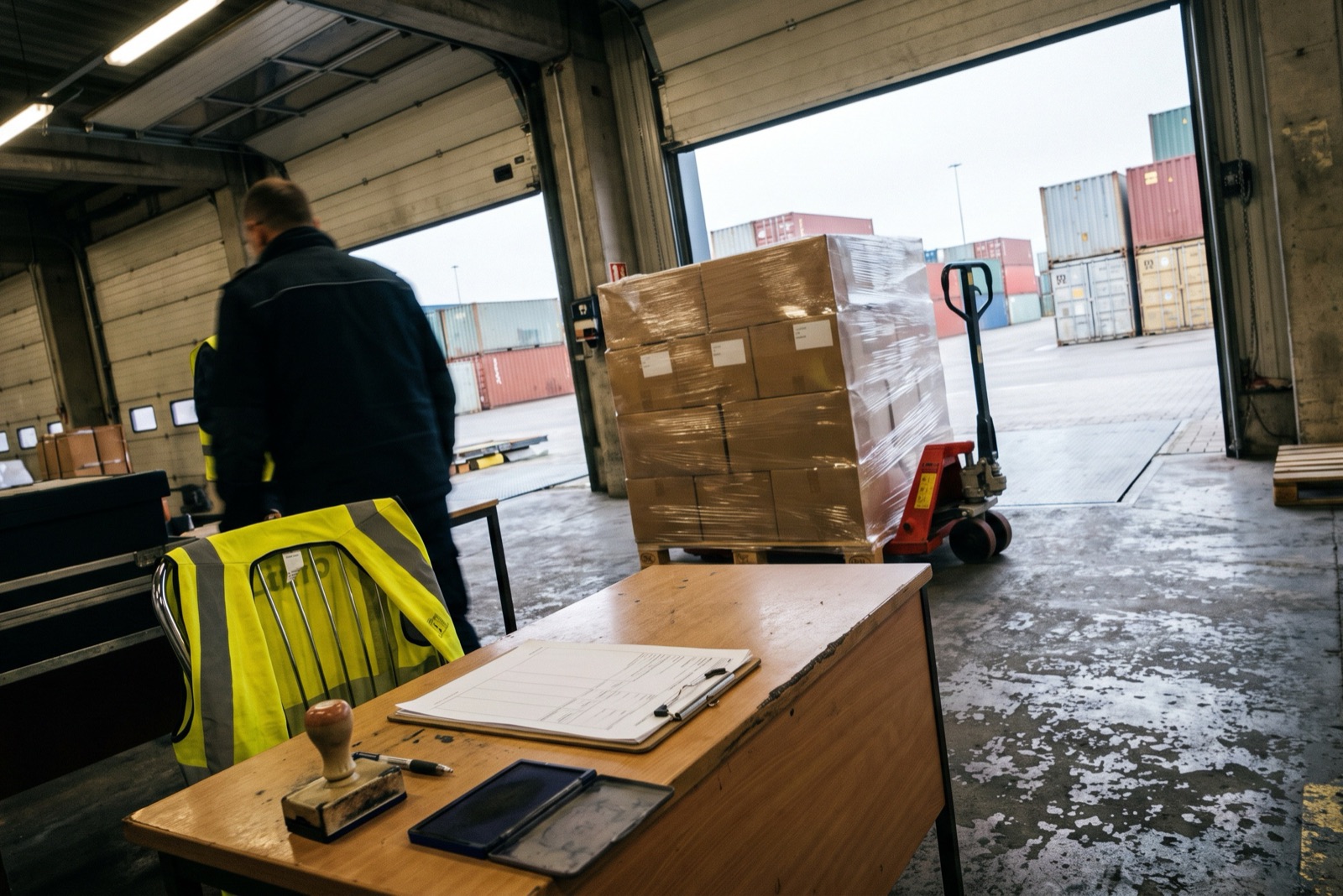
The importer of record is the party that answers to customs for a shipment: whose name is on the import declaration, who owes the duty, and who customs calls when something is wrong. Most of the guides that rank for the term are written for imports into the United States. If you sell from the US, the UK or Australia and plan to hold stock in an EU warehouse, the rules work differently, and the difference decides who can clear your goods at all.
EU customs law does not use the phrase “importer of record”. The Union Customs Code, which the Commission says entered into force on 1 May 2016, talks about the declarant and the customs representative instead, and a new code adopted in September 2026 adds an “importer”.
In the EU, the importer of record is the declarant: the person who lodges the import declaration in its own name, or in whose name it is lodged. The declarant must be established in the EU, with narrow exceptions, so overseas brands usually import through an EU-based indirect customs representative. That representative and the brand both owe the customs duty. Import VAT and product safety duties sit alongside it, so settle all three before stock ships.
What an importer of record is in the EU
The legal term to learn is “declarant”. Article 5(15) of the Union Customs Code, Regulation (EU) No 952/2013, defines it as the person lodging a customs declaration “in his or her own name or the person in whose name such a declaration or notification is lodged”. That person carries the weight the US term carries.
Lodging a declaration has consequences. Under Article 15(2) of the code, the person who lodges it becomes responsible for the accuracy and completeness of the information, for the authenticity of the supporting documents, and for complying with the obligations of the customs procedure. When a customs representative lodges it, the representative is bound by the same obligations.
A customs representative is someone appointed “to carry out the acts and formalities required under the customs legislation” for another person (Article 5(6)). Customs brokers often act in this role.
Who can be the declarant under EU customs law
Here is the rule that catches overseas sellers. Article 170(2) of the code says: “The declarant shall be established in the customs territory of the Union.”
Article 170(3) lists the exceptions. A declarant does not need to be established in the EU if it lodges a declaration for transit or temporary admission, if it lodges declarations occasionally and customs considers that justified, or if it is established in a country next to the EU and presents the goods at a border office adjacent to that country, where that country grants reciprocal benefits.
A brand in Texas, Manchester or Melbourne that sends a container to an EU warehouse every few weeks doesn’t fit those boxes well. For regular stock imports, someone established in the EU usually has to be the declarant. Ask your customs partner how your shipments will be declared before you book freight.
EORI: the number behind the declarant
Customs identifies the declarant by its EORI number. The European Commission says an EORI number is mandatory for the clearance of all types of customs operations in the EU customs territory. Businesses not established in the EU need one if they lodge customs declarations, entry or exit summary declarations or temporary storage declarations, or act as a carrier.
A business with no EU establishment requests its EORI number from the customs authority of the EU country where it intends to carry out its first customs operation, and holds only one valid number at a time.
Whether you need an EORI number of your own when an EU representative declares in its own name depends on the set-up, so ask your customs partner to confirm it in writing.
Direct vs indirect customs representation
Article 18 of the code lets any person appoint a customs representative, in one of two forms:
| Direct representation | Indirect representation | |
|---|---|---|
| Whose name is on the declaration | Yours. The representative acts “in the name of and on behalf of” you | The representative’s. It acts “in his or her own name but on behalf of” you |
| Who is the declarant | You | The representative |
| Who owes the customs duty | You | The representative and you, jointly |
The representative must state which form it is using. Under Article 19(1), anyone who doesn’t say they are acting as a representative is treated as acting in their own name and on their own behalf.
For an overseas brand the table settles it. Direct representation makes you the declarant, so the establishment rule still applies to you. Indirect representation puts an EU-established business in the declarant’s seat, which is the service “IOR services” sell. Article 18(2) adds that the representative must itself be established in the EU, except where it acts for persons not required to be established there.
What the importer of record is liable for
Customs duty and records
A customs debt on import arises when goods are released for free circulation, at the moment the declaration is accepted. Article 77(3) of the code names the debtors: “The declarant shall be the debtor. In the event of indirect representation, the person on whose behalf the customs declaration is made shall also be a debtor.” Article 84 makes several debtors jointly and severally liable for the whole amount.
An indirect representative does not take the duty bill off you. Customs can ask either of you for it. Where duty goes uncollected because of false information, Article 77(3) also makes a debtor of the person who supplied it and knew, or ought reasonably to have known, that it was false. Your product descriptions, values and origin data feed the declaration, so they matter.
Article 51 requires the documents behind a declaration to be kept for at least three years.
Import VAT
Import VAT is separate from customs duty. The EU abolished the VAT exemption for imported goods below EUR 22 on 1 July 2021, so all imports are now subject to VAT. Under Article 201 of the VAT Directive (2006/112/EC), import VAT is payable by whoever the member state of importation designates or recognizes as liable, and Article 85 bases it on the customs value. Each country sets its own mechanics.
The Netherlands shows how much the name on the declaration matters. The Dutch Tax Administration says import VAT is paid to Customs, and that you can deduct it later as input tax if the goods are destined for you according to the customs declaration. A foreign business can’t apply for the Dutch import reverse charge itself, but a tax representative can apply for an Article 23 permit on its behalf, so the VAT is accounted for in the return and not paid up front. More in VAT in the Netherlands for foreign sellers; what applies to you is a question for a tax adviser.
Product compliance
Product law has its own “importer”, and it is not the customs declarant. The General Product Safety Regulation (EU) 2023/988, which applies from 13 December 2024, defines an importer as a person “established within the Union who places a product from a third country on the Union market”.
Article 16 of that regulation says a product it covers can’t be placed on the market unless an economic operator established in the EU is responsible for it. The Market Surveillance Regulation (EU) 2019/1020 lists who that can be, in Article 4(2): an EU manufacturer, an importer, an authorized representative with a written mandate, or an EU fulfillment service provider for the products it handles, where none of the others is in the EU.
Article 11 of the GPSR gives an importer concrete duties: its name and postal and electronic address on the product, packaging or an accompanying document; instructions and safety information in a language consumers easily understand; and the technical documentation kept for the authorities for 10 years. Agree in writing who carries these duties for your products. Clearing your container through customs doesn’t settle it.
What changes under the new Union Customs Code
The rules above are from the current code. On 16 September 2026 the European Parliament and the Council adopted Regulation (EU) 2026/2108, a new Union Customs Code that repeals Regulation (EU) No 952/2013. It applies from 21 September 2027, with some provisions earlier and some from 1 July 2028.
The new code creates an “importer” role. In ordinary cases it is the person who “has the power to decide and has decided” to bring the goods into the EU, then down a ranked list ending with the carrier and the holder of the goods. Under Article 27 there is one importer at a time, and it must provide the required information before release, ensure duties are paid, and ensure the goods comply with the other legislation customs applies.
The importer must be established in the EU, with exceptions. One of them matters to overseas brands: an importer that “is represented by an indirect representative established in the customs territory of the Union”. Indirect representation stays the route in.
For sales to EU consumers, the new code adds an “importer for distance sales”: the seller or the platform facilitating the sale. The Commission says they will become liable for customs duties and product compliance, and gives 1 July 2028 as the date its Customs Data Hub becomes mandatory for ecommerce. If you still ship some orders direct from home, that reaches you too.
IOR services: questions to ask a fulfillment provider
Put these to every provider on your shortlist, and get the answers in writing:
- Who will be the declarant when my stock arrives? A named company, not “our partner”.
- Direct or indirect representation? If direct, how do they deal with the establishment rule in Article 170(2)?
- Whose EORI number goes on the declaration, and do I need one of my own?
- Who pays the import VAT, and how is it recovered? In the Netherlands, ask whether a tax representative with an Article 23 permit is part of the set-up.
- Who is the EU responsible economic operator for my products under the GPSR, and whose name and address go on the label?
- Do you clear stock on arrival or hold it in a customs warehouse first? The bonded warehouse providers in this directory state that they offer customs warehousing.
- What do you need from me for each shipment? Commercial invoice, tariff codes, origin and values, and who checks them before they go to customs.
If you also ship single orders from home, the DDP vs DAP explainer covers who pays duty on each one. For the wider choice, see how to choose a 3PL in Europe, and the providers that state they work with brands from outside the EU on the EU fulfillment for US and UK brands page.
FAQ
Can anyone be an IOR?
Not in the EU. The equivalent role, the declarant, must be established in the EU customs territory under Article 170(2) of the Union Customs Code, apart from narrow exceptions such as transit and occasional declarations. Overseas brands usually rely on an EU-based indirect customs representative to declare their stock.
What is the difference between importer of record and consignee?
The consignee is the party the goods are shipped to. The importer of record, in EU terms the declarant, is the party in whose name the customs declaration is lodged. They can be the same business. Under Article 77(3) of the Union Customs Code the customs debt attaches to the declarant, and in indirect representation also to the person represented.
How do I get an importer of record number?
The EU has no separate importer of record number. The identifier customs uses is the EORI number. A business not established in the EU requests it from the customs authority of the EU country where it intends to carry out its first customs operation. Each business holds only one valid EORI number at a time.
The bottom line on the importer of record in the EU
For a brand outside the EU, the importer of record question has one usual answer: an EU-established indirect customs representative lodges the declaration in its own name, and you stay jointly liable for the duty. Import VAT and product safety duties are separate, and each needs its own named party.
Your next step is to send the seven questions above to two or three providers before your first shipment, and have a tax adviser or customs partner confirm what applies to your business.