
DDP vs DAP: Who Pays Duty on a European Order
DDP vs DAP for brands selling into the EU: who clears customs, who pays import duty and VAT, what the customer sees at the door, and why EU stock matters.
 By Andrew Calloway, editor
Published October 5, 2026 · Updated October 9, 2026
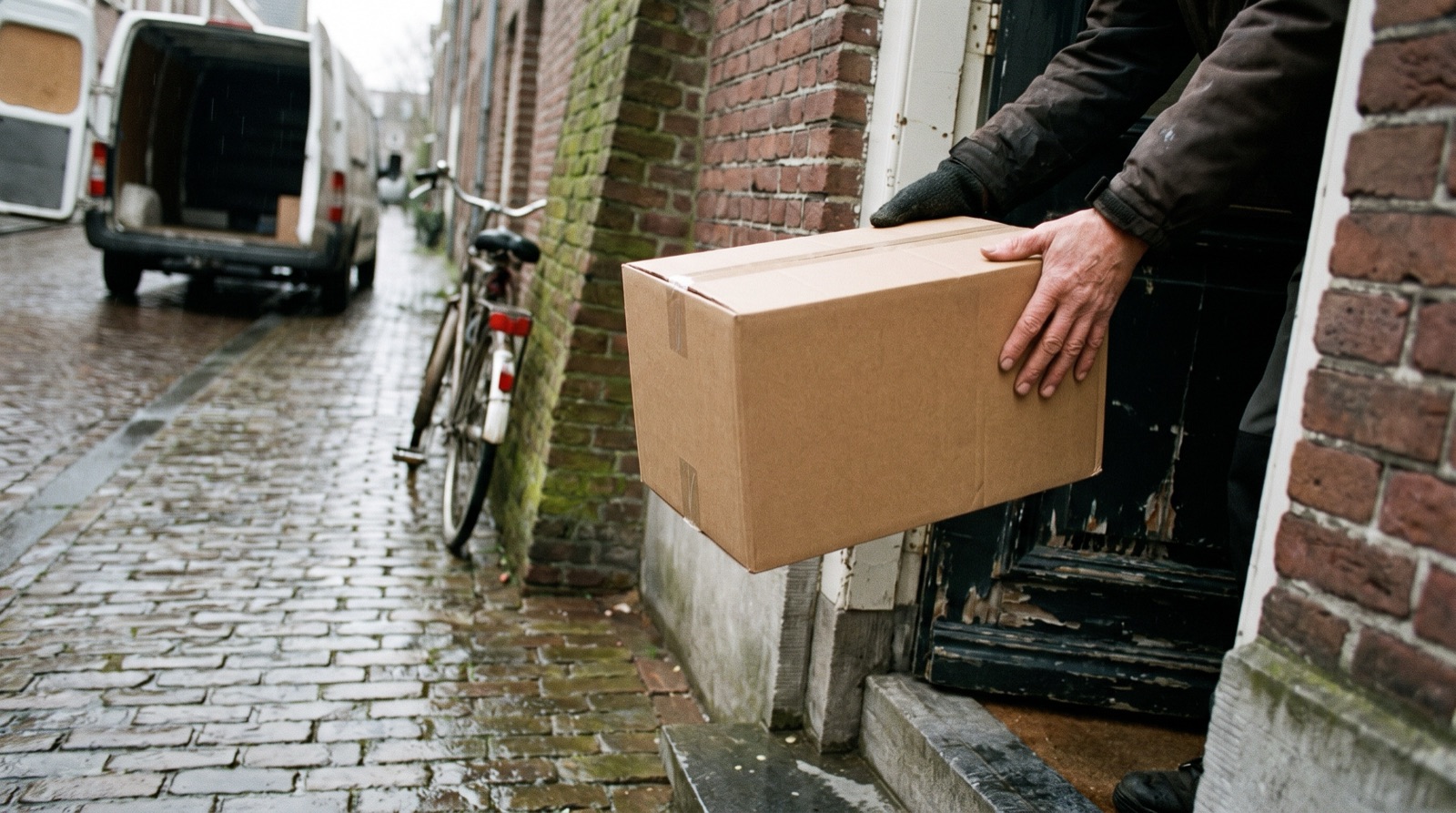
DDP vs DAP comes down to one question: who clears the goods through import customs and pays the duty and taxes. Under DDP the seller does. Under DAP the buyer does. For an online brand shipping from the United States, the United Kingdom or Australia into the EU, that choice decides whether your customer pays at checkout or gets a bill from the carrier before the parcel is handed over.
The two terms come from the Incoterms rules of the International Chamber of Commerce (ICC). EU customs law answers the same questions in its own words: the declarant, the debtor and the person liable for import VAT.
DDP vs DAP is a question of who handles import clearance. Under DAP, the seller delivers to the named place and the buyer clears the goods and pays the import duty and taxes. Under DDP, the seller clears the goods for import and pays the duty and applicable taxes, which the ICC calls the maximum obligation of all eleven Incoterms rules. In EU ecommerce, DDP usually means VAT is collected at checkout; DAP means the customer pays on delivery.
What changed in 2026 for parcels into the EU
A duty now applies to low-value parcels. Since 1 July 2026, the EU charges a temporary customs duty of EUR 3 per item on goods in consignments worth EUR 150 or less sold at a distance, until 1 July 2028. “Per item” follows the tariff classification, not the quantity. The Commission’s example: five T-shirts in one parcel are one item, while one T-shirt and one watch are two. The legal text is Regulation (EU) 2026/382.
The customs reform moves the duty to sellers. On 16 September 2026 the European Parliament and the Council adopted a reform of the EU Customs Union. The Commission says online platforms become “importers for distance sales,” and that platforms and sellers “will become liable for financial obligations (customs duties and other fees).” The same page says a Union handling fee on small parcels will be introduced by 1 November 2026, with the amount still to be set by the Commission.
Both push online sales toward DDP, where the seller carries the import charges.
DDP vs DAP at a glance
| DAP (Delivered at Place) | DDP (Delivered Duty Paid) | |
|---|---|---|
| Where delivery happens | At the named destination, on the arriving vehicle, ready for unloading | Same place, but cleared for import |
| Export clearance | Seller | Seller |
| Import clearance | Buyer | Seller |
| Import duty and taxes | Buyer | Seller |
| Unloading at destination | Buyer | Buyer |
| Risk passes to buyer | On delivery at the named place | On delivery at the named place |
Every row comes from the ICC’s text of the Incoterms 2020 rules. Only the import lines differ.
What DAP means under the Incoterms rules
Under Delivered at Place, the ICC says the seller delivers the goods, and transfers risk, “when the goods are placed at the disposal of the buyer on the arriving means of transport ready for unloading at the named place of destination.”
DAP Incoterms put export clearance on the seller and import clearance on the buyer. In the ICC’s words, the seller “has no obligation to clear the goods for import,” to pay any import duty, or to carry out any import customs formalities.
If the buyer fails to organise import clearance, the ICC notes, “the goods will be held up at a port or inland terminal in the destination country,” with the risk of loss on the buyer. And the rules do not set tariff rates; they only decide who pays them.
What delivered duty paid means
Delivered duty paid uses the same delivery point as DAP, with one addition. The goods must arrive “cleared for import.” Under DDP the seller pays “duties, taxes and any other costs related to export, transit and import clearance,” according to the ICC rule text.
The ICC calls DDP “the Incoterms® rule imposing on the seller the maximum level of obligation of all eleven Incoterms® rules.” It advises a seller that cannot obtain import clearance to choose DAP or DPU instead, and adds that “there may be tax implications and this tax may not be recoverable from the buyer.”
The ICC Academy’s comparison of DAP and DDP adds that import clearance “may be difficult for a foreign seller,” and that DAP fits better where local rules prevent the seller from managing it. For a brand based outside the EU, that is the heart of the decision.
Who pays import duty and VAT in the EU
Incoterms decide who pays between seller and buyer. EU law decides who owes the money to the authorities, and the two are separate.
- Customs duty. Under the Union Customs Code, Article 77(3), “the declarant shall be the debtor.” If a customs agent acts as an indirect representative, the person it acts for is also a debtor.
- Import VAT. All goods imported into the EU have been subject to VAT since 1 July 2021, whatever their value. The VAT Directive, Article 201, makes import VAT payable by the person the member state of importation designates or recognises as liable.
- The VAT base. Article 86 of the same directive adds duties due by reason of importation, plus transport and insurance costs up to the first place of destination, to the amount VAT is charged on. Import VAT is charged on a figure that already includes the duty.
A DDP contract does not change who customs bills; it records that the seller agreed to arrange and pay. The guide to landed cost walks through each line of the figure.
What your customer sees at the door
For a parcel sent from outside the EU to a consumer, what matters is the VAT route behind it. EU rules offer two routes for consignments up to EUR 150.
The DDP-style route: IOSS. The Import One Stop Shop lets the seller charge VAT at the time of sale. The Commission’s guidance on low-value consignments explains that the VAT the consumer pays the seller is declared in one monthly IOSS return, and the import itself is then exempt from VAT. A seller established outside the EU generally needs to appoint an EU-established intermediary to use the scheme. The customer pays once, at checkout.
The DAP-style route: special arrangements. Where IOSS is not used, the postal operator or carrier declares the parcel and collects the VAT from the consignee. The same guidance states that “the consumer (typically the consignee (importer) of the parcel) is liable for the payment of VAT.” In its worked example, the post “collects the VAT from the consumer in order to deliver the book.” The customer pays at the door, or the parcel does not arrive.
The Commission’s 2026 guidance on the EUR 3 duty sets out who declares low-value goods. The IOSS holder comes first, then the user of the special arrangements, and only as a last resort the consumer. It states that the responsibility for paying the duty “should first and foremost lie with the declarant.” For DDP shipping to consumers, that puts the work on you or the party acting for you.
DDP shipping for bulk stock into a European warehouse
Sending pallets to your own 3PL is a different case. Incoterms are, in the ICC’s words, trade terms “reflecting business-to-business practice in contracts for the sale and purchase of goods.” When you ship your own stock to a warehouse you contract with, there may be no sale between two parties at that point. Some forwarders sell services under a “DDP” label for this kind of shipment, so ask exactly which customs role and which charges the service covers.
What decides the paperwork is the customs role:
- The declarant must usually be in the EU. Article 170(2) of the Union Customs Code says “the declarant shall be established in the customs territory of the Union,” with narrow exceptions such as occasional declarations that customs consider justified.
- A representative can act for you. Under Article 18 any person may appoint a customs representative, acting directly in your name or indirectly in its own name. The representative must generally be established in the EU.
- An EORI number is needed to declare. A business not established in the EU needs an EORI number if it lodges a customs declaration. It requests one from the customs authority of the EU country where it first declares.
Some countries let import VAT on inbound stock be accounted for in the VAT return. In the Netherlands, an Article 23 permit does this, and a foreign business cannot apply itself but can engage a tax representative who can. What you need depends on your own setup, so confirm it with a tax adviser or your provider’s customs partner. The article on the importer of record covers who takes on the role and what it carries.
Why holding stock inside the EU changes the question
Once stock is cleared into the EU, consumer orders stop being imports. The 27 member states form a customs union, and after goods clear customs on entry “no more customs duties are due” and they circulate freely within the EU.
On the EUR 3 duty, the Commission’s 2026 guidance says that to decide whether a sale is a distance sale of imported goods, “it is important to see where the goods are at the time of supply.” Goods already cleared into an EU warehouse when the order comes in are sold from inside the customs union.
Customs warehousing lets non-EU goods sit in authorised premises without import duty, which becomes due when they are released for free circulation. For retail, the 2026 guidance says a supplier selling goods stored in a customs warehouse to consumers “must first declare the goods for free circulation.” The directory lists companies that state they operate a bonded warehouse.
How to choose between DDP and DAP
- Pick DDP for consumer parcels sent from outside the EU if you can register for IOSS through an intermediary. Your customer pays one price at checkout.
- Expect DAP outcomes if you ship consumer parcels without IOSS. The carrier collects VAT from your customer before delivery.
- Use DAP for a B2B buyer in the EU who has its own customs set-up and wants to clear the goods itself.
- Avoid DDP if you cannot get the goods cleared for import, directly or through a representative. The ICC points sellers to DAP or DPU in that case.
- For your own stock, settle who acts as declarant and how import VAT is handled before the first pallet ships.
Then compare providers on the inbound side. The EU fulfillment companies for US, UK and Australian brands are a starting point, and the guide to choosing a 3PL in Europe lists the customs questions to ask each one.
FAQ
What does DAP mean in shipping terms?
DAP stands for Delivered at Place. The seller delivers the goods to a named destination, ready for unloading from the arriving vehicle, and carries the risk until then. The buyer unloads, clears the goods for import and pays any import duty and taxes, according to the ICC’s Incoterms 2020 rules.
What are Incoterms in shipping?
Incoterms are eleven three-letter trade terms published by the ICC, currently in the 2020 version. Each rule sets out where delivery happens, when risk passes, and who arranges and pays for transport and customs clearance.
Are DAP and DPU the same?
No. Both deliver at the named destination, but the ICC states that under DAP the seller does not unload the goods, while under DPU (Delivered at Place Unloaded) the seller does. DPU is the only Incoterms rule that requires the seller to unload at destination.
What does delivered duty paid mean?
Delivered duty paid (DDP) means the seller delivers the goods cleared for import at the named place and pays the export, transit and import duties and taxes. The buyer’s main task is to unload.
Verdict: DDP vs DAP for a European order
For consumer orders into the EU, DDP is the better experience: one price at checkout and no payment demand from a carrier. It also matches where EU law is heading, with sellers and platforms becoming the importers for distance sales. DAP still suits B2B buyers with their own customs set-up.
The bigger decision comes first. With stock inside the EU, the DDP vs DAP question applies once, to the bulk shipment, and each consumer order after that ships from inside the customs union. Settle who acts as declarant, confirm the VAT route with a tax adviser, then pick a provider. You can compare them country by country in the list of fulfillment companies in Europe.