
IOSS Number: What It Is and Who Needs One
What an IOSS number is, the EUR 150 limit, when a non-EU seller needs an EU intermediary, how marketplaces fit in, and why EU warehouse stock is left out.
 By Andrew Calloway, editor
Published October 5, 2026 · Updated October 9, 2026
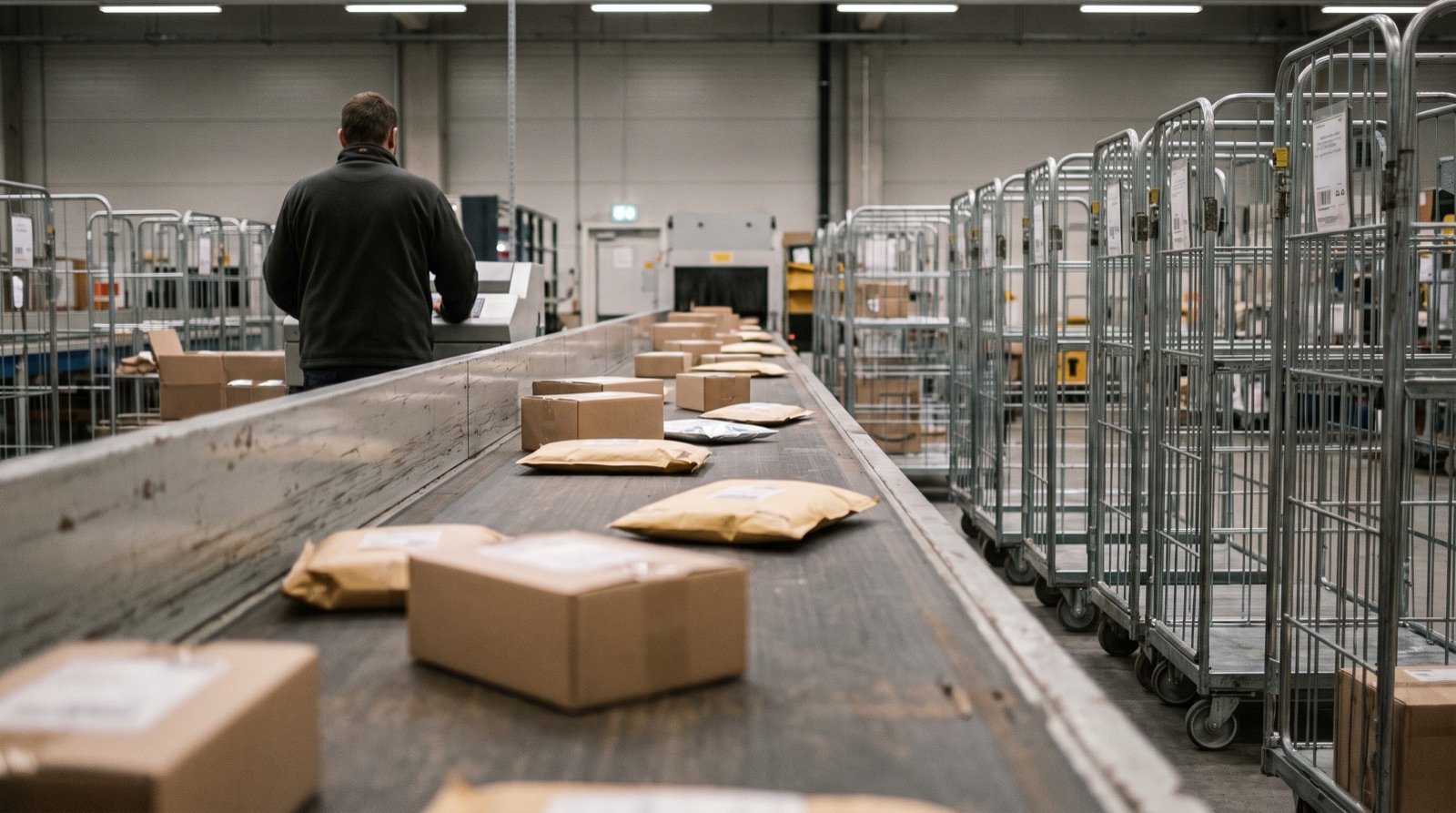
An IOSS number is the identification number a seller gets when it registers for the EU’s Import One Stop Shop, a VAT scheme for low-value parcels shipped to EU consumers from outside the EU. Put it on the customs data for a parcel, and the import VAT is treated as already charged at checkout, so customs doesn’t collect it again at the border.
If you ship single orders from the United States, the United Kingdom or Australia to European customers, you’ll meet IOSS early. It has hard limits: a value cap per parcel, an intermediary rule for most overseas sellers, and a scope that ends once your stock moves into a European warehouse.
An IOSS number identifies a seller registered for the EU’s Import One Stop Shop. It covers VAT on distance sales of goods shipped from outside the EU in consignments worth EUR 150 or less, excluding excise goods. Most non-EU sellers must appoint an EU-established intermediary to register. The number goes to customs with the import declaration. Goods already stored in an EU warehouse are outside IOSS.
What is an IOSS number?
The Import One Stop Shop (IOSS) was created to simplify the declaration and payment of VAT on distance sales of low-value goods imported from outside the EU. It started with the wider One Stop Shop reform, which the Commission’s Guide to the VAT One Stop Shop dates to 1 July 2021. The same reform abolished the VAT exemption for imported goods below EUR 22, so every import into the EU now carries VAT.
When you register, the EU country that registers you (your “Member State of identification”) gives you an individual IOSS VAT identification number. The Commission’s registration page shows the format as IMxxxyyyyyyz.
In practice, you charge the VAT due in your customer’s country when the order is placed, and the Directive treats the goods as supplied when the payment has been accepted. You then file one return for all your IOSS sales across the EU. The Commission’s guide says it is submitted monthly in the import scheme, and Germany’s Federal Central Tax Office says the return is due by the end of the calendar month following the period it covers.
The scheme is optional. The Commission notes that special arrangements exist for consignments up to EUR 150 where IOSS is not used.
The EUR 150 limit and what IOSS covers
IOSS applies only to goods in consignments with an intrinsic value of EUR 150 or less. The VAT Directive, as amended by Council Directive (EU) 2017/2455, says the scheme covers goods “except products subject to excise duty, in consignments of an intrinsic value not exceeding EUR 150.”
That sentence holds two conditions:
- The cap is per consignment. It applies to the parcel, not each product in it. A parcel worth more than EUR 150 goes through a normal import.
- Excise goods are out. Products subject to excise duty can be sold at a distance, but the Commission’s guide says they cannot be declared in the import scheme.
The scheme also covers only sales to consumers. The Commission’s guide describes the buyer as a non-taxable person: a private customer, not a VAT-registered business.
Who can get an IOSS number, and when you need an intermediary
Any business making distance sales of goods imported in consignments up to EUR 150 can register for the import scheme. The catch for overseas brands is in the next sentence of the Commission’s page: if the business has no establishment in the EU, it “needs to appoint an intermediary to be able to use the scheme.”
An IOSS intermediary has to be a taxable person established in the EU. Under the Commission’s guide, the intermediary is the person liable to pay the VAT and to meet the scheme’s obligations, such as filing the return, paying the VAT and keeping records, in the name of the seller who appointed it. It also notes that member states may add their own rules, for example a requirement for a guarantee.
The intermediary registers first in its own country and receives an intermediary number in the format INxxxyyyyyyz, which Italy’s Agenzia delle Entrate points out is not a VAT identification number. It then registers each seller it represents, and each seller receives its own IOSS number.
There is one exception. A business established in a country with which the EU has a VAT mutual assistance agreement can choose any member state and register without an intermediary, for goods dispatched from that country. The Commission’s guide gives Norway as the example. Ask a tax adviser whether your own country qualifies.
EU-established businesses do not need an intermediary for IOSS, but may decide to appoint one.
How the IOSS number is used on a customs declaration
The IOSS number does its work at the border. Under Article 143(1)(ca) of the VAT Directive, as worded in Directive (EU) 2017/2455, the import is exempt from VAT when the IOSS number reaches customs in the country of import “at the latest upon lodging of the import declaration.” You already charged the VAT at checkout, so the number tells customs not to charge it twice.
The number travels in the shipment data sent with the parcel. For consignments up to EUR 150, the EU introduced a new, shorter form of customs declaration for release into free circulation, which the Commission calls the super-reduced dataset. Ask your carrier or customs broker how it passes the number on, and check that it reaches customs before the parcel arrives.
What happens without an IOSS number
Without IOSS, VAT is still due on every import. It is just collected at a different point, often from your customer.
For consignments up to EUR 150, the Directive sets out special arrangements. Under Article 369z, the person for whom the goods are destined is liable for the VAT, and the person presenting the goods to customs on the buyer’s behalf collects it from them and pays it over.
For consignments above EUR 150, IOSS is not available at all, and the parcel goes through a standard import declaration. Since 1 July 2021, all goods imported into the EU are subject to VAT, so the import VAT is assessed there along with any customs duty.
Either way, your customer may be asked to pay before the parcel is handed over. Whether that charge lands on you or on the buyer depends on your shipping terms, which is the difference explained in DDP vs DAP.
Marketplaces as deemed supplier
If you sell through a marketplace, the marketplace may be the one that handles IOSS, not you. Article 14a of the VAT Directive says that when a business facilitates distance sales of goods imported in consignments up to EUR 150 “through the use of an electronic interface such as a marketplace, platform, portal or similar means,” that business is deemed to have received and supplied those goods itself.
For VAT purposes only, the marketplace is treated as the supplier on those orders. The Commission’s guide calls this a deemed supplier, whether the platform is established in the EU or outside it.
So marketplace orders and own-store orders can follow two different VAT routes. Ask each marketplace how it treats imported orders up to EUR 150, and handle your own-store orders separately.
Why an IOSS number does not cover stock in an EU warehouse
This point catches brands moving to European fulfillment. Once the stock sits in a warehouse inside the EU, sales from that warehouse are no longer imports.
The Commission’s guide says it directly: goods must be dispatched from a third territory or third country to count, and “goods already stored in a warehouse in the EU are not covered” by the definition of distance sales of imported goods.
Two other sets of rules take over instead:
- Sales that start and end in the same country are domestic supplies. For an ordinary seller, the guide says these cannot be declared in the One Stop Shop; they fall under that country’s domestic VAT rules. A marketplace acting as deemed supplier is the exception and declares them in the Union OSS.
- Sales shipped from the warehouse country to another member state are intra-Community distance sales. These can be declared in the Union OSS scheme, which covers intra-Community distance sales of goods. The guide notes that a business not established in the EU can use the Union scheme for these sales, with the country where dispatch begins as its member state of identification, and that it is allocated a VAT number there before registering.
The bulk shipment that brings the stock into the EU is itself an import. Once it has cleared customs, no more customs duties are due as the goods move between member states. How a foreign seller handles that import VAT differs by country; the Dutch route is covered in VAT in the Netherlands for foreign sellers.
You can run both models side by side: IOSS for parcels still shipped from home, and EU stock for your best sellers. Agree the setup with a tax adviser before the first pallet moves, because each model brings its own VAT obligations.
What changed for low-value parcels in 2026
The customs rules for low-value parcels changed in 2026, and the changes reach every parcel IOSS covers.
- A EUR 3 customs duty per item. Council Regulation (EU) 2026/382 removed the customs duty relief for low-value consignments. From 1 July 2026 until 1 July 2028, a customs duty of EUR 3 per item applies to goods in consignments up to EUR 150. The Commission’s guidance says it applies to distance sales regardless of VAT scheme, IOSS included, and that “item” follows tariff classification: five T-shirts in one parcel are one item (EUR 3), while a T-shirt and a watch are two (EUR 6).
- A handling fee is coming. The Commission states that a Union handling fee on small parcels will be introduced by 1 November 2026, with the amount to be set in a delegated act. No amount was stated there on 5 October 2026.
- A customs data hub from 2028. The same page says use of the EU Customs Data Hub becomes mandatory for ecommerce on 1 July 2028.
So an IOSS number still settles the VAT at checkout. It does not remove the per-item duty, and parcels under EUR 150 no longer enter the EU free of customs duty.
FAQ
What does IOSS mean?
IOSS stands for Import One Stop Shop, an optional EU scheme for charging VAT at checkout on imported consignments up to EUR 150 and paying it through one monthly return.
How do I obtain an IOSS code?
You register in one EU member state. An EU business registers directly. A business outside the EU usually appoints an EU-established intermediary, who registers the seller. The member state of identification then issues a number in the format IMxxxyyyyyyz.
Is an IOSS number mandatory?
No. The scheme is optional. Without it, VAT on parcels up to EUR 150 is collected under the special arrangements or through a standard import, often from the customer at delivery.
What is the difference between an IOSS number and an EU VAT registration number?
An IOSS number is issued only for the import scheme and is used to declare IOSS sales. An ordinary EU VAT number is issued by one country for VAT obligations under its domestic rules. The OSS returns are additional and do not replace the domestic VAT return.
Do you need an IOSS number?
An IOSS number fits when you ship orders worth EUR 150 or less from outside the EU straight to European consumers through your own store, and want the buyer to pay VAT at checkout, not at the door. If you sell mainly through marketplaces, the platform may be the deemed supplier. If your stock already sits in an EU warehouse, IOSS doesn’t apply to those sales at all.
Rules on registration and intermediaries vary in the detail by member state, so confirm your own position with a tax adviser or your fulfillment company’s customs partner. If you are weighing a move to EU stock, the guide to choosing a 3PL in Europe walks through the customs and VAT questions to settle first, and the list of providers serving US, UK and Australian brands is a place to start the shortlist.