
GPSR for Non-EU Sellers: The Responsible Person Rule
What the EU's GPSR asks of brands based outside the EU: who can be the responsible person, what goes on the label and listing, and what to ask your 3PL.
 By Andrew Calloway, editor
Published October 5, 2026 · Updated October 9, 2026
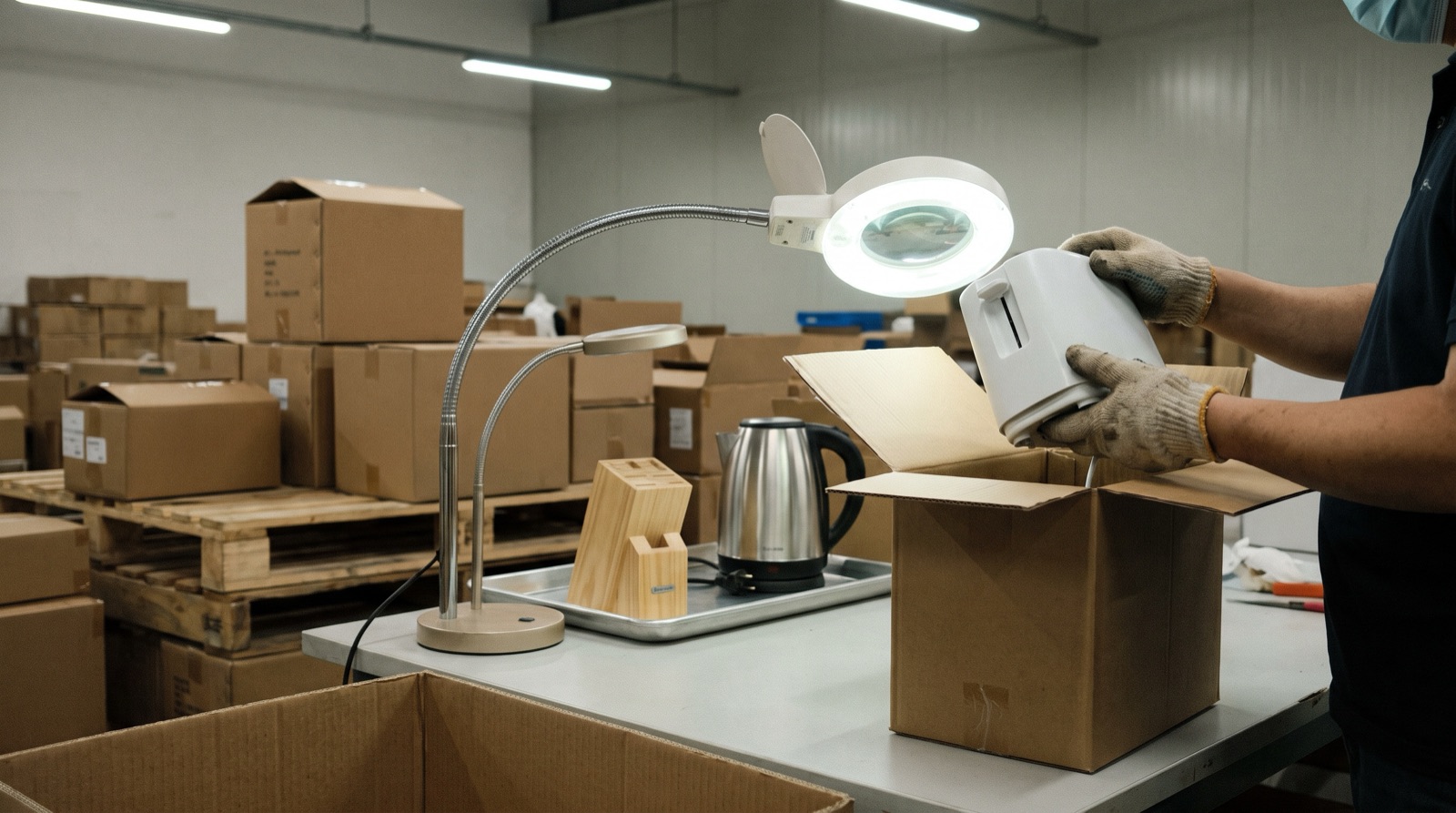
GPSR is the EU’s General Product Safety Regulation, and for a brand based outside the EU its most practical rule is a short one: a product it covers can’t be placed on the EU market unless a business established in the EU is responsible for it. If you sell from the US, the UK or Australia and hold stock in a European warehouse, that rule decides whose name goes on your packaging and what you agree with your fulfillment provider.
The law is Regulation (EU) 2023/988. Article 52 says it applies from 13 December 2024, and Article 50 repealed the old General Product Safety Directive (2001/95/EC) from the same date. As a regulation, it is directly applicable in every member state.
The GPSR has applied since 13 December 2024 to most non-food consumer products sold in the EU, online or in shops. Under Article 16, a product it covers needs an economic operator established in the EU who is responsible for it: an EU manufacturer, an importer, an authorised representative with a written mandate, or, if none of those exists, the fulfillment provider handling it. That operator’s name and contact details go on the product and in your listing.
What the GPSR covers and what it leaves out
The regulation applies to products intended for consumers, or likely to be used by consumers even if not intended for them (Article 3(1)). Article 2(3) adds that it covers them whether new, used, repaired or reconditioned.
Article 2(2) leaves out medicines, food, feed, living plants and animals, animal by-products, plant protection products, transport equipment operated by a service provider, certain aircraft and antiques.
Under Article 2(1), the GPSR applies only where no specific EU law with the same objective regulates the product’s safety. Where a product has its own harmonised rules (toys and electrical equipment are examples), the GPSR covers only the aspects and risks those rules don’t. The Commission’s guidelines for businesses, published on 21 November 2025, give childcare articles, gymnastic equipment and furniture as examples of products the GPSR covers fully.
Selling from abroad doesn’t put you outside it. Article 4 treats an online offer as made available on the EU market if it is targeted at consumers in the EU. The Commission’s guidelines name the signs: where you dispatch to, the languages, payment methods, and a member state’s currency or domain name.
The GPSR responsible person rule under Article 16
Article 16(1) of the GPSR reads: “A product covered by this Regulation shall not be placed on the market unless there is an economic operator established in the Union who is responsible for the tasks set out in Article 4(3) of Regulation (EU) 2019/1020 in respect to that product.”
That points to the Market Surveillance Regulation (EU) 2019/1020. Its Article 4(2) lists who can fill the role:
| Option | Who it is | When it counts |
|---|---|---|
| EU manufacturer | A manufacturer established in the EU | Your brand has an EU company that makes or brands the product |
| Importer | An EU-established business that places a product from a third country on the EU market | Only where the manufacturer is not in the EU |
| Authorised representative | An EU business with your written mandate to perform the tasks | You choose and appoint it |
| Fulfillment service provider | An EU-established provider, for the products it handles | Only where none of the three above is established in the EU |
Two definitions in Article 3 of the GPSR matter for an overseas brand. An importer is a person “established within the Union” who places a product from a third country on the EU market, so a company in the US or Australia can’t be its own importer. And a fulfillment service provider is anyone offering at least two of warehousing, packaging, addressing and dispatching, without owning the products. Postal, parcel delivery and freight transport services are excluded.
A 3PL that stores, packs and ships stock it doesn’t own fits that definition. The Commission’s guidelines tell such providers they can “automatically become the responsible economic operator” when no EU manufacturer, importer or mandated authorised representative exists for a product. Don’t rely on that default without a written agreement.
If you appoint an authorised representative, Article 10 of the GPSR requires a written mandate, and the representative must show a copy to the authorities on request. The EU authorised representative explainer covers that route.
Toys, electronics and cosmetics
Article 2(1) of the GPSR switches off Chapter III, Section 1 (which holds Article 16) for products under harmonised EU laws. Instead, Article 4 of Regulation 2019/1020, which has applied since 16 July 2021, sets the same EU responsible operator rule directly for products under the laws it lists, including the toy safety directive (2009/48/EC), the low voltage directive (2014/35/EU) and the radio equipment directive (2014/53/EU).
Cosmetics have their own regime. The Commission says only products with a “responsible person” designated in the EU can be placed on the market under Regulation (EC) No 1223/2009. See EU cosmetics rules for overseas brands.
What the responsible person has to do
The tasks come from Article 4(3) of Regulation 2019/1020, read for the GPSR. The responsible person must:
- Check the paperwork. Verify that the technical documentation has been drawn up and make sure the authorities can get it on request.
- Answer the authorities. After a reasoned request, give a market surveillance authority the information and documents needed to show the product is safe, in a language it understands.
- Report risks. Inform the authorities when it has reason to believe a product presents a risk.
- Cooperate on fixes. Make sure corrective action is taken, or the risk is reduced, when the authorities require it.
Article 16(2) of the GPSR adds regular checks, where the product’s risks call for them: that the product matches its technical documentation, and that it carries the identifier, manufacturer details and instructions Article 9 requires. The responsible person must be able to show documented evidence of those checks. Under Article 20(4), when the manufacturer isn’t in the EU, the responsible person who knows of an accident must make sure it is notified through the Safety Business Gateway.
None of this moves your own duties as manufacturer. Article 13(1) treats anyone who places a product on the market under their own name or trademark as the manufacturer, so a private-label brand is one. Article 9 then requires an internal risk analysis, technical documentation kept for 10 years, and a public channel such as a phone number or email address where consumers can report safety problems.
GPSR requirements for the label and the online listing
On the product or packaging
Read together, Articles 9 and 16(3) require:
- a type, batch or serial number, or another element that identifies the product
- the manufacturer’s name, registered trade name or trademark, and postal and electronic address
- the responsible person’s name and contact details, including postal and electronic address, on the product or its packaging, the parcel or an accompanying document
- clear instructions and safety information in a language consumers easily understand, as set by the member state where the product is sold, unless the product can be used safely without them
The Commission’s guidelines say an electronic address can be an email address or a part of your website through which consumers can contact you directly; a website alone isn’t enough.
In your online listing
Article 19 applies to every distance sale, your own webshop included. The offer must “clearly and visibly” show:
- the manufacturer’s name, trade name or trademark, with postal and electronic address
- where the manufacturer is not in the EU, the name, postal and electronic address of the responsible person
- information that identifies the product, including a picture, its type and any other identifier
- any warning or safety information that goes on the product or packaging, in a language consumers easily understand
What online marketplaces must do
Marketplaces have their own chapter. Under Article 22, a marketplace provider must register with the Safety Gate Portal and set up contact points for authorities and consumers. Article 22(9) says its interface must let traders give the same four details that Article 19 lists for every product, and show them on the listing. It must act on an authority’s order about a dangerous product within two working days, process product safety notices within three working days, and suspend traders that frequently offer non-compliant products, after a warning.
Providers that state they handle marketplace orders are on the marketplace fulfillment page.
GPSR compliance checklist before you ship stock to the EU
Whether each point applies to your products is a question for a product compliance adviser.
- Confirm the product is in scope, and whether a product-specific EU law (toys, electronics, cosmetics) governs it instead of, or as well as, the GPSR.
- Do the risk analysis and technical documentation required by Article 9(2), and plan to keep it for 10 years.
- Name the responsible person in writing. If it is an authorised representative, sign the mandate. If it is your fulfillment provider, get its written acceptance.
- Update labels and packaging with the product identifier, your details and the responsible person’s details.
- Translate instructions and safety information for each country you sell into.
- Update every listing with the four Article 19 items, on your own site and on each marketplace.
- Set up a complaint channel and agree who logs complaints and notifies accidents.
Customs is a separate track: the GPSR “importer” is not the customs declarant, as the importer of record explainer shows. For duty, VAT and declarations, see importing into the EU.
Choosing a fulfillment provider with the GPSR in mind
Because a fulfillment provider can end up as your responsible person by default, settle the question before you sign. Ask each provider on your shortlist:
- Will you act as the responsible person for my products, or do you expect me to appoint an authorised representative?
- If you act, what do you need from me: technical documentation, test reports, the list of products?
- Whose name and address go on the label or parcel, and can you add inserts or labels at receiving?
- Who answers market surveillance authorities, and how fast do you pass their requests to me?
- How are complaints and accidents routed to whoever notifies them through the Safety Business Gateway?
A provider that declines the role isn’t a bad choice; you then appoint a representative. One that hasn’t thought about it is a warning sign. For the wider selection process, read how to choose a 3PL in Europe, and compare providers that state they serve brands from outside the EU on the EU fulfillment for US and UK brands page or by country in the European directory.
FAQ
What does GPSR stand for?
GPSR stands for General Product Safety Regulation, Regulation (EU) 2023/988. It replaced the General Product Safety Directive and has applied since 13 December 2024.
What products fall under GPSR?
Consumer products, new or used, except the exclusions in Article 2(2) such as food, medicines and antiques. Products with their own EU safety laws follow those laws for the risks they cover.
Is GPSR being enforced?
National market surveillance authorities enforce it. Article 44 requires each member state to set penalties that are “effective, proportionate and dissuasive”, and Article 22 lets authorities order marketplaces to remove offers of dangerous products. The regulation doesn’t set fine amounts; each country does.
What does GPSR mean for a small business?
The duties attach to your role (manufacturer, importer, distributor and so on), and the definitions don’t depend on company size. Article 17 asks the Commission to publish guidelines with particular regard to small and micro businesses. Its 2025 notice is those guidelines, with a checklist for each role.
Do products placed on the market before 13 December 2024 have to comply?
Article 51 says member states shall not impede products that complied with the old directive and were placed on the market before that date. Products placed on the market from that date on must meet the GPSR.
The bottom line on GPSR for non-EU sellers
For a brand outside the EU, the GPSR comes down to a named, EU-established operator that answers for each product, with its details on the packaging and in every listing. Decide who that is before stock moves, put it in writing, and ask a product compliance adviser to confirm what applies to your range.