
Importing into the EU: Customs, VAT and Duty for Online Brands
How online brands from the US, UK and Australia get goods into the EU: customs, EORI, import duty and VAT, IOSS, Incoterms, product rules and a checklist.
 By Andrew Calloway, editor
Published October 5, 2026 · Updated October 9, 2026
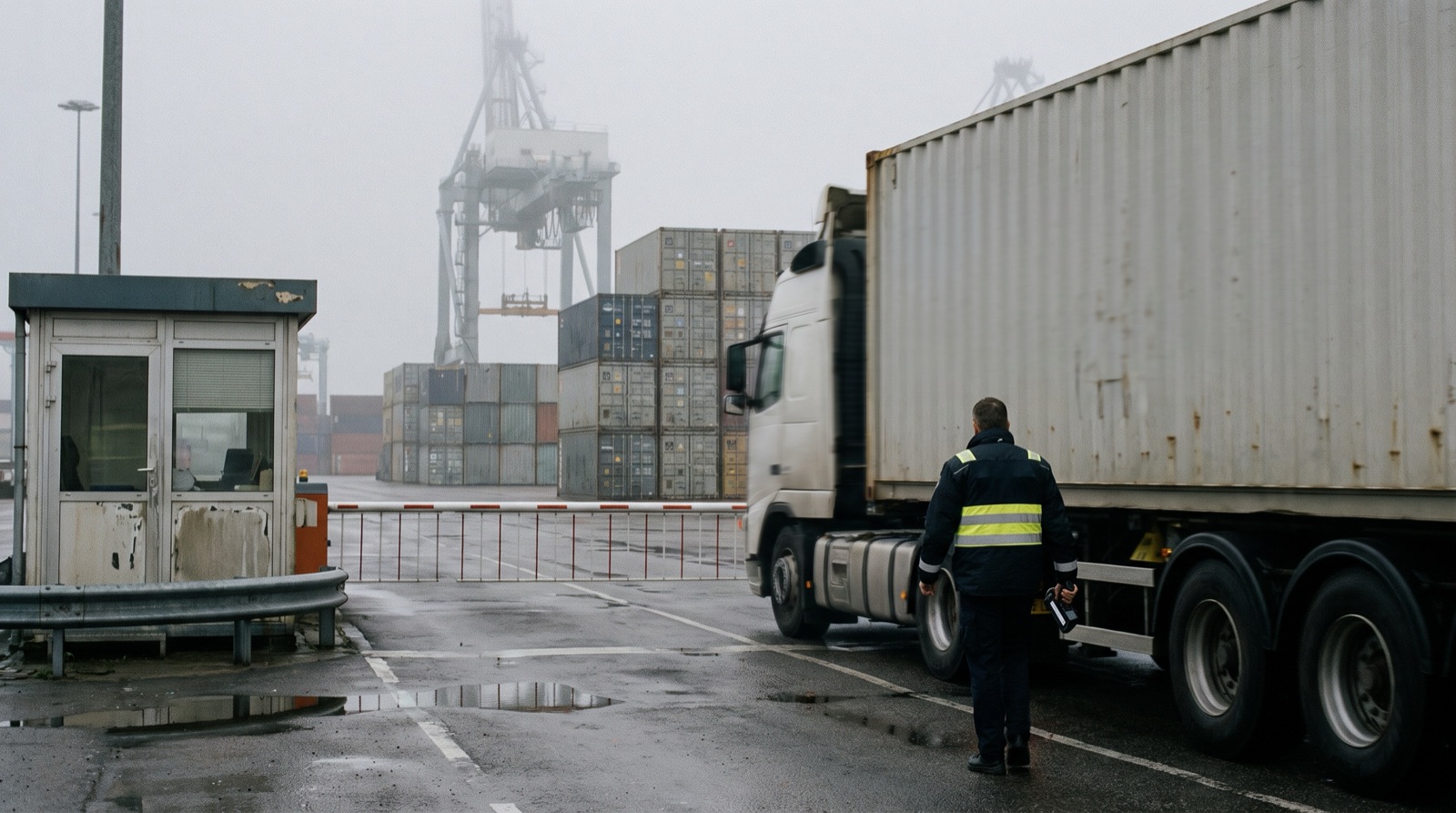
Importing into the EU as an online brand comes down to one border crossing and the paperwork that goes with it. Your goods enter the customs union once, someone established in the EU declares them, duty and import VAT are paid or deferred, and from then on they move between the 27 member states like local stock.
Each section below links to a full guide. What applies to your own business is a question for a tax adviser or customs partner.
Importing into the EU means clearing goods into free circulation once, at the external border. An EU-established declarant (often an indirect customs representative) lodges the declaration under an EORI number. Duty is set by the product code, origin and customs value. Import VAT is charged at the rate of the country of import. Parcels shipped one by one face separate rules, including the EUR 3 duty per item since 1 July 2026.
What changed in 2026 for goods entering the EU
Three changes this year affect every brand selling into the EU.
- A duty on low-value parcels. From 1 July 2026 until 1 July 2028, Council Regulation (EU) 2026/382 sets a customs duty of EUR 3 per item on goods in consignments worth up to EUR 150. Those goods used to enter duty free.
- A handling fee is on the way. The Commission says a Union handling fee on small parcels will be introduced by 1 November 2026.
- A new customs code. The EU adopted a new Union Customs Code on 16 September 2026. Its timetable is further down.
How the customs union works when importing into the EU
The EU is one customs territory. A common customs tariff applies to imports from outside, and no customs duties are charged at the borders between member states. In the Commission’s words, once goods have cleared customs on entry, “no more customs duties are due, and no more customs checks are conducted”.
The United Kingdom sits outside this territory. GOV.UK says the UK has left the EU Single Market and Customs Union, and exporters now face import requirements on entry to EU member states. The EU-UK trade agreement gives zero tariffs and zero quotas only on goods that comply with the rules of origin. Customs declarations are still needed.
Two routes into the EU: parcels or bulk stock
Online brands use one of two routes, and many rules differ between them.
| Each parcel shipped from home | Bulk stock imported into an EU warehouse | |
|---|---|---|
| Customs entries | One per order | One per inbound shipment |
| Duty | EUR 3 per item on consignments up to EUR 150, from 1 July 2026 | The tariff rate for each product code, on the bulk shipment |
| Import VAT | IOSS at checkout, or collected at delivery | Paid or deferred when the stock is cleared |
| After clearance | Each parcel is its own import | Goods circulate freely, with no further customs duties |
Route 1: shipping each order from home
Every order becomes a small import. Since 1 July 2021, an import declaration has been required for all goods entering the EU, regardless of value. Who pays, you at checkout or the customer at the door, is the DDP vs DAP question.
Route 2: importing bulk stock into an EU warehouse
Your stock crosses the border in one shipment, is cleared once, and then ships to customers as domestic EU parcels. European fulfillment companies run this model. One example is 3PL Service Netherlands, an ecommerce fulfillment company in Assen that works with US, UK and Australian brands shipping across the EU. Symbiolog GmbH in Burgbernheim, Germany, states that companies based outside the EU can send a full truckload so the goods are cleared through customs before orders arrive, and SPS Fulfillment in Milan offers import, customs, warehousing and last-mile delivery under one contract for brands expanding into the EU.
Compare providers on the list of fulfillment companies in Europe or the Netherlands and Germany pages, and see how to choose a 3PL in Europe.
Who declares the goods: the importer of record
EU law doesn’t use the phrase “importer of record”. The person who matters is the declarant, and Article 170(2) of the Union Customs Code says: “The declarant shall be established in the customs territory of the Union.” The exceptions are narrow, such as transit and occasional declarations.
So a brand in Texas, Leeds or Sydney that imports stock regularly usually needs an EU-established indirect customs representative to declare in its own name. The brand stays jointly liable for the duty. More in the importer of record guide.
EORI: the number on every declaration
The Commission says an EORI number is mandatory for the clearance of all types of customs operations in the EU. Businesses not established in the EU need one if they lodge customs declarations, entry or exit summary declarations or temporary storage declarations, or act as a carrier.
A business with no EU establishment applies in “the EU country in which they intend to carry out their first customs operation”, and holds one valid number at a time. See the EORI number guide.
EU import duty: customs value and the rate
The Commission lists three inputs for calculating customs duties: the tariff that applies, the value of the goods and their origin. The duty is normally a percentage of the customs value.
The Dutch Tax Administration describes the customs value as the value of the goods plus transport and insurance up to the external border of the EU.
To find a rate, look up your product code in TARIC, the EU’s integrated tariff database. It holds third-country duties, preferences, quotas, anti-dumping duties and import restrictions. It does not hold VAT rates. The landed cost guide turns those inputs into a per-unit figure.
EU import VAT and the Dutch Article 23 example
All goods imported into the EU have been subject to VAT since the EUR 22 exemption was abolished on 1 July 2021. Each country sets its own standard rate, which cannot be less than 15%. The Your Europe table, last checked on 13 July 2026, lists 21% for the Netherlands and 19% for Germany.
How the VAT is paid depends on the country. In the Netherlands you pay import VAT to Customs and can deduct it later as input tax if the goods are destined for you according to the customs declaration.
The Dutch reverse charge changes the timing. With an Article 23 permit, the VAT isn’t paid at import but declared on the VAT return. A foreign entrepreneur can’t apply for the permit itself. It engages a tax representative, who can apply for it. More in VAT in the Netherlands for foreign sellers.
IOSS for low-value parcels
The Import One Stop Shop was created to simplify the declaration and payment of VAT on distance sales of low-value goods, up to EUR 150, imported from outside the EU. You collect the VAT at checkout and declare it through the scheme.
Two limits matter. A seller established outside the EU needs to appoint an intermediary, who must be a taxable person established in the EU. And IOSS covers goods shipped from outside the EU, so stock you have already imported into an EU warehouse falls outside it. Low-value consignments also carry the EUR 3 per item duty from 1 July 2026 until 1 July 2028. The IOSS number guide explains registration.
Incoterms: who clears the goods
Incoterms are the ICC’s eleven three-letter trade terms. The ICC says they clarify the tasks, costs and risks involved in delivering goods from sellers to buyers.
For an online brand, the pair that matters is DAP and DDP. Under DAP the buyer handles import clearance. Under DDP the seller does. When you import your own stock into an EU warehouse, agree the term with your freight forwarder so it’s clear who books clearance and who pays the charges. The DDP vs DAP guide compares the two.
Customs warehousing: holding stock before duty is due
A customs warehouse lets you bring stock into the EU and pay later. The Commission says non-EU goods stored in premises authorised by customs are not subject to import duties or other charges while they stay there. Storage can last an unlimited period, unless the goods could threaten health or the environment.
When goods leave for the EU market, they are released for free circulation, and import duty and taxes such as VAT become due at once. This suits stock that may be re-exported, or whose final market is still open. The bonded warehouse guide covers the details, and the directory lists providers that state they run a bonded warehouse.
Product rules that come with the import
Under Article 201 of the Union Customs Code, release for free circulation includes applying “prohibitions and restrictions” along with collecting the duty. Product law decides whether your goods can be sold at all.
- General Product Safety Regulation. Since 13 December 2024, each covered product needs a responsible economic operator in the EU: a manufacturer, importer, authorised representative or fulfilment service provider. Food and medicinal products are excluded. See GPSR for non-EU sellers and the guide to EU authorised representatives.
- Cosmetics. Under Regulation (EC) No 1223/2009, a cosmetic product can be placed on the market only if a responsible person is designated within the EU, and it is notified once through the EU’s cosmetics portal (CPNP). See EU cosmetics rules for overseas brands and the cosmetics and supplement fulfillment companies.
Storing your stock doesn’t make a warehouse responsible for these roles. Agree in writing who holds each one.
The new Union Customs Code timetable
Regulation (EU) 2026/2108, adopted on 16 September 2026, creates a new Union Customs Code and an EU Customs Authority, and repeals Regulation (EU) No 952/2013. The key dates:
- 21 September 2027. The new code applies, with a few provisions applying earlier.
- 1 July 2028. The provisions on distance sales apply. The Commission says use of the EU Customs Data Hub becomes mandatory for ecommerce on 1 July 2028, and for all traders from 1 March 2034.
The code defines an “importer for distance sales” as the person supplying goods in distance sales or the person facilitating them. The Commission says non-EU platforms and sellers are responsible for customs formalities and duty payments on goods they sell into the EU. An importer not established in the EU can still act through an EU-established indirect representative.
Checklist before your first shipment into the EU
- Pick your route. Parcels from home, bulk stock in an EU warehouse, or both.
- Name the declarant. Get the company that will lodge your declarations, and whether it acts as a direct or indirect representative, in writing.
- Settle EORI. Ask your customs partner whether you need your own number and in which country to apply.
- Classify every product. Find each product code and duty rate in TARIC and check the origin.
- Plan import VAT. Decide whether it is paid at import or deferred, for example through a Dutch tax representative with an Article 23 permit.
- Decide on IOSS if you will ship low-value parcels from outside the EU.
- Fix the Incoterm with your freight forwarder.
- Assign product roles. Name your GPSR responsible economic operator and, for cosmetics, your responsible person.
FAQ
What are the import requirements for the EU?
Goods need a declaration lodged by an EU-established declarant under an EORI number, the right product code, origin and customs value, and payment or deferral of duty and import VAT. Products must also meet EU product rules such as the GPSR.
What are the current import tariffs in the EU?
The rate depends on the product code and origin, so look it up in TARIC. Goods in consignments worth up to EUR 150 carry a EUR 3 per item duty from 1 July 2026 until 1 July 2028.
What are the new rules for European customs?
The EU adopted a customs reform on 16 September 2026. A new Union Customs Code applies from 21 September 2027, its distance-sales provisions from 1 July 2028, and a handling fee on small parcels is due by 1 November 2026.
The verdict on importing into the EU
For a brand with steady European sales, importing into the EU as one cleared shipment into an EU warehouse is simpler than thousands of small imports. Line up the declarant, EORI, VAT and product roles before freight is booked. Then shortlist providers on the EU fulfillment for US and UK brands page, or compare the best 3PL companies in Europe.